

 Facebook
 X
X
 Pinterest
 Copy Link
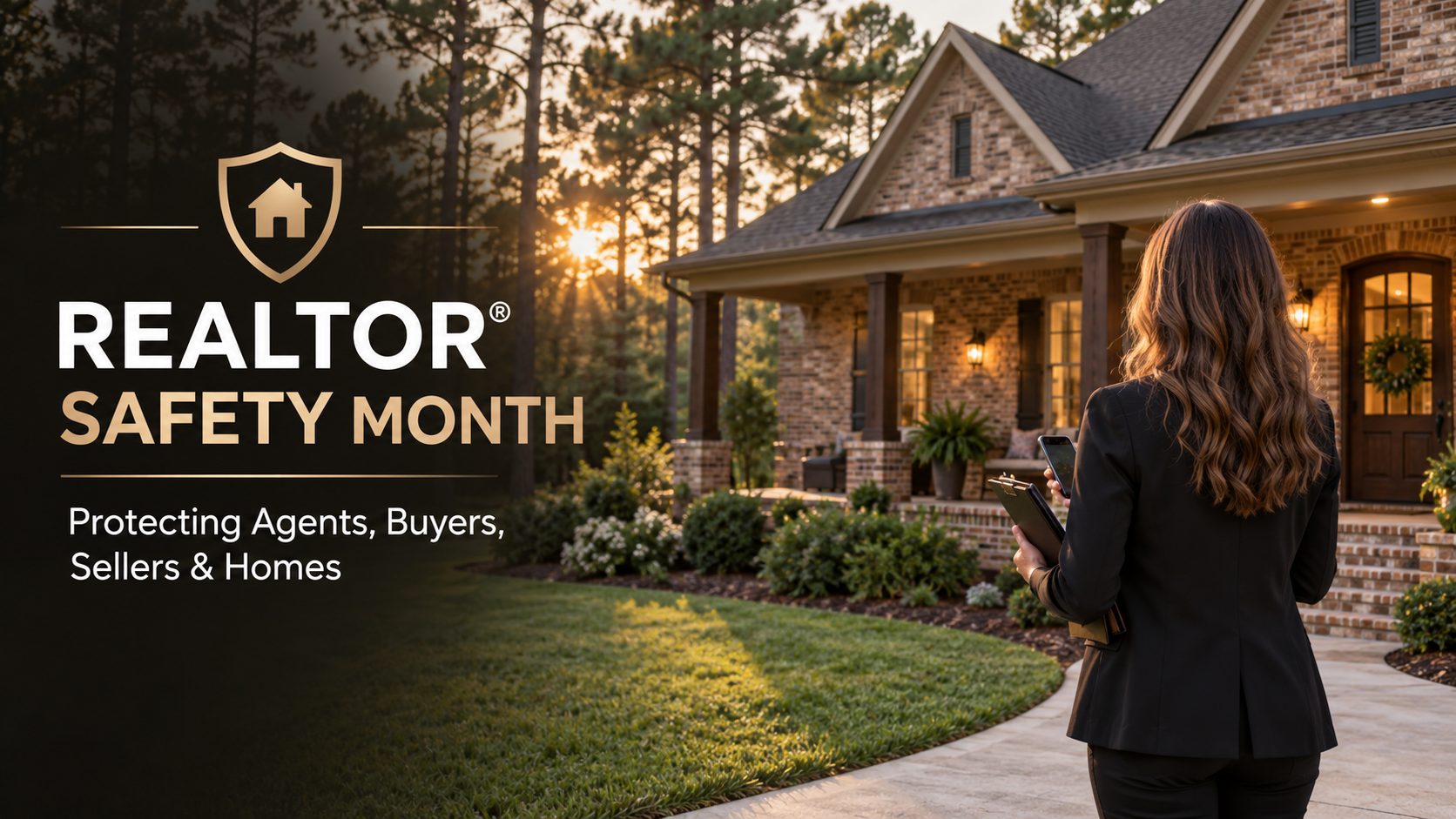
REALTOR® Safety Month: Why Safety Protocols Protect Agents, Buyers, Sellers, and Your Home
September is recognized by the National Association of REALTORS® as REALTOR® Safety Month, but safety is something real estate professionals must practice every day of the year. REALTORS® often work alone, meet people they have never met, enter vacant properties, hold open houses, travel to unfamiliar locations, and handle appointments during evenings and weekends. Those are normal parts of our job, but they also require thoughtful safety procedures.
As a full-time REALTOR® serving Lufkin, Huntington, Nacogdoches, Angelina County, and communities throughout Deep East Texas, I want my clients to understand why certain protocols are in place. Safety procedures are not meant to make buying or selling a home difficult. They protect the agent, the client, the property, and everyone involved in the transaction.
The National Association of REALTORS® REALTOR® Safety Program provides education, tools, and resources designed to help real estate professionals recognize risks and use safer business practices.
Why Is Safety a Special Concern in Real Estate?
Real estate is personal. We meet clients in homes, discuss schedules and finances, tour vacant properties, unlock private residences, and sometimes work in isolated rural areas where cell service may be limited. A property showing may also involve outbuildings, acreage, animals, pools, uneven ground, construction, or unfamiliar neighborhoods.
Good safety practices help reduce risks such as:
- Meeting an unknown person alone at a vacant property
- Allowing an unauthorized visitor into an occupied home
- Theft or damage during a showing or open house
- Accidents involving stairs, pools, pets, acreage, or construction areas
- Fraudulent inquiries, fake identities, wire fraud, and other scams
- An agent or client being left without help in an emergency
Safety does not mean assuming the worst about people. It means being prepared, communicating clearly, and protecting everyone as consistently as possible.
Why Does a REALTOR® Ask for Identification Before a Showing?
A REALTOR® may ask a new client to provide a valid photo ID, complete a registration form, or meet first at the real estate office or another public location. The agent may also confirm the client’s full name, phone number, email address, and financing status before scheduling a private tour.
These are reasonable professional safeguards. Sellers are trusting an agent with access to their home, belongings, and personal space. Verifying who will enter the property helps protect that trust. It also gives the buyer and agent an opportunity to discuss needs, expectations, financing, and the showing process before entering a private residence.
If an agent asks for identification, it is not meant to be unfriendly or accusatory. It is part of responsible real estate representation.
Why Do Buyers Need an Appointment and Buyer Consultation?
Private showings should be scheduled through a licensed real estate professional. A buyer consultation allows the agent to learn what the buyer needs, explain the buying process, review agency relationships and required documents, and establish a safe plan for touring homes.
Depending on the circumstances, an agent may ask a buyer to:
- Meet at the brokerage office before the first private showing
- Provide identification and current contact information
- Supply a lender preapproval or proof of funds when appropriate
- Sign required representation or showing documents
- Avoid bringing unregistered guests to an appointment
- Travel in a separate vehicle or follow the agent’s meeting instructions
- Confirm or cancel an appointment promptly
These steps help the agent coordinate with the seller, keep an accurate record of property access, and make the showing more productive for everyone.
How Can Sellers Make Their Homes Safer for Showings?
When your home is listed for sale, buyers and their agents need reasonable access—but that does not mean personal or valuable items should remain exposed. Before professional photography, showings, or an open house, sellers should secure:
- Prescription medications
- Jewelry, cash, firearms, and collectibles
- Credit cards, checkbooks, bills, and bank statements
- Passports, Social Security cards, and other identity documents
- Spare keys, garage remotes, access codes, and computer passwords
- Mail, family calendars, school information, and travel plans
- Small electronics and other easily removed valuables
Do not simply place sensitive items in a drawer. Remove them from the property or secure them in a locked location that visitors cannot access.
Sellers should also tell their REALTOR® about alarm systems, exterior cameras, gates, pets, loose steps, low ceilings, uneven walkways, pools, workshops, livestock, or any other potential hazard. These details help the agent plan safe access and give visitors appropriate instructions.
Should a Seller Be Home During a Showing?
In most situations, it is best for the seller and other household members to leave during a scheduled showing. Buyers usually feel more comfortable discussing the property openly when the seller is not present. Leaving also reduces confusion about who is responsible for guiding visitors through the home.
Never allow an unexpected visitor into your home just because that person says they are a buyer, inspector, appraiser, contractor, or real estate agent. Ask the visitor to contact the listing agent and schedule through the proper channel. Legitimate real estate professionals will understand and respect that boundary.
What Safety Rules Should Buyers Follow While Touring a Property?
Buyers can help create a safer and more respectful showing by following a few simple rules:
- Arrive on time and let the agent know who will attend.
- Stay with the agent rather than separating throughout the property.
- Do not open personal drawers, medicine cabinets, closed containers, or private belongings.
- Supervise children closely.
- Ask before touching equipment, opening gates, entering workshops, approaching animals, or walking onto neighboring property.
- Wear suitable shoes when touring acreage, construction sites, barns, docks, or uneven terrain.
- Do not photograph personal belongings or security features without permission.
- Report an unlocked door, open window, damaged item, or safety concern immediately.
A home for sale is still someone else’s property. Respecting the home helps protect the seller and preserves a professional showing experience.
How Do Open-House Safety Procedures Protect Everyone?
An open house creates a different type of access than a private appointment. Visitors may be asked to sign in and provide contact information. The hosting agent may limit access to certain rooms, monitor how many people enter at once, or ask visitors to remain together.
Sellers should secure valuables, medication, documents, weapons, keys, and access codes before the event. Agents may also use a buddy system, notify their office of the schedule, keep their phone accessible, establish an emergency plan, and walk through the home before and after the event.
Visitors should enter through the designated door, follow the host’s directions, keep children with them, and avoid restricted areas. If a safety rule is in place, it is there to protect the public and the property—not to inconvenience anyone.
Digital Safety Matters Too
Real estate safety is not limited to physical showings. Buyers and sellers must also be alert to phishing attempts, fraudulent payment instructions, fake property listings, identity theft, and social media oversharing.
One of the most important rules in a real estate transaction is this: Never send money based only on an unexpected email, text message, or last-minute change in wiring instructions. Independently call your title company, lender, or known real estate professional using a trusted phone number to verify instructions before transferring funds.
Clients should also avoid publicly posting that a home is vacant, sharing alarm or lockbox information, announcing travel plans, or uploading documents that display signatures, account numbers, or personal data.
What Should You Do If Something Feels Wrong?
Trust your instincts. If a situation feels unsafe, step away and contact the appropriate person. An agent may end or reschedule a showing, ask another professional to attend, move a first meeting to the office, or decline to enter a property alone. A buyer or seller should also speak up immediately if something feels unusual.
For an immediate threat or emergency, move to a safe location and call 911. Safety takes priority over a showing, an open house, or any real estate appointment.
Frequently Asked Questions About REALTOR® Safety
Why won’t my REALTOR® meet me alone at a vacant house for the first time?
Meeting first at an office or public location allows the agent to verify identity, discuss the buyer’s needs, explain the process, and create a safer showing plan. It is a common professional precaution.
Why does the agent need the names of everyone attending?
The seller and listing agent need to know who is entering the property. Accurate attendance information improves security, communication, and accountability.
Can I tour a listed home without an appointment?
No. Do not enter the property, yard, gate, workshop, or outbuildings without confirmed permission and a scheduled appointment. Contact the listing agent or your buyer’s agent to arrange access.
Should sellers leave security cameras on during showings?
Sellers should discuss cameras and recording devices with their REALTOR® and follow all applicable laws. Agents and visitors should be informed as required. Cameras should never be placed where a person would reasonably expect privacy.
Is requesting identification discriminatory?
Identity-verification procedures should be applied consistently and fairly to prospective clients. The purpose is to promote safety and protect property—not to treat people differently based on a protected characteristic.
What should I do if someone comes to my door asking to see my listed home?
Do not let the person inside. Ask them to contact the listing agent or their own licensed real estate agent to schedule a confirmed showing.
Safety Is a Shared Responsibility
The best real estate experiences are built on communication, preparation, respect, and trust. REALTORS® have a responsibility to use good judgment and professional safety practices. Buyers and sellers can help by respecting appointment procedures, protecting personal information, reporting concerns, and following the agent’s instructions.
If I ask for identification, request a first meeting, confirm who will attend, or set a specific showing procedure, please know that I am protecting you, the property owner, myself, and the integrity of the transaction. I take that responsibility seriously.
If you are preparing to buy or sell a home in Lufkin, Huntington, Nacogdoches, Angelina County, or anywhere in Deep East Texas, I would be honored to help you move forward with knowledge, preparation, and care. You can also read more about why sellers benefit from hiring a REALTOR® or explore my East Texas real estate website and current listings.
“The prudent see danger and take refuge, but the simple keep going and pay the penalty.” — Proverbs 27:12
Ready to Buy or Sell? Let’s Connect!
Twila Bertrand, REALTOR®
CENTURY 21 Cota Realty
Your Hometown REALTOR®
Serving Lufkin, Huntington, Nacogdoches, Angelina County, and Deep East Texas
Call or text: 936-208-7631
Email: twilabertrand@gmail.com
Visit my professional profiles and real estate websites:
- Twila Bertrand’s East Texas real estate website
- CENTURY 21 professional profile
- Zillow profile and client reviews
- Realtor.com professional profile
- HAR.com professional profile
- Facebook real estate page
- LinkedIn professional profile
This article provides general safety information and is not legal advice. Safety procedures may vary by brokerage, property, and situation. In an emergency, call 911.


